 Metrics That Care
The instrument
Walk in with the record already made.
Thirty seconds a day at home becomes one dated page your doctor can read before the visit ends.
Free to start. No ads. Nobody sells your family's health data.
Thirty seconds
One sheet, a few taps, done standing up.
Quick Check-in is built for the end of a long day — one-handed, at the bedside, without sitting down to it. This is the whole daily ask.
What you capture
What hurt, how much, and whether it's happened before.
Symptoms carry a severity and a date, so "she's been off lately" becomes something with a shape. Same for behavior, hygiene, sleep, meals and medications.
It adds up on its own
A month of watching, in the direction each thing moved.
Mood, sleep, energy and symptoms roll into a summary you never have to assemble. You logged the days; the app did the arithmetic.
What's worth mentioning
It tells you what moves with what.
Patterns are rated by how strong the link actually is — so you walk in knowing the two things worth the doctor's fifteen minutes, instead of all of them.
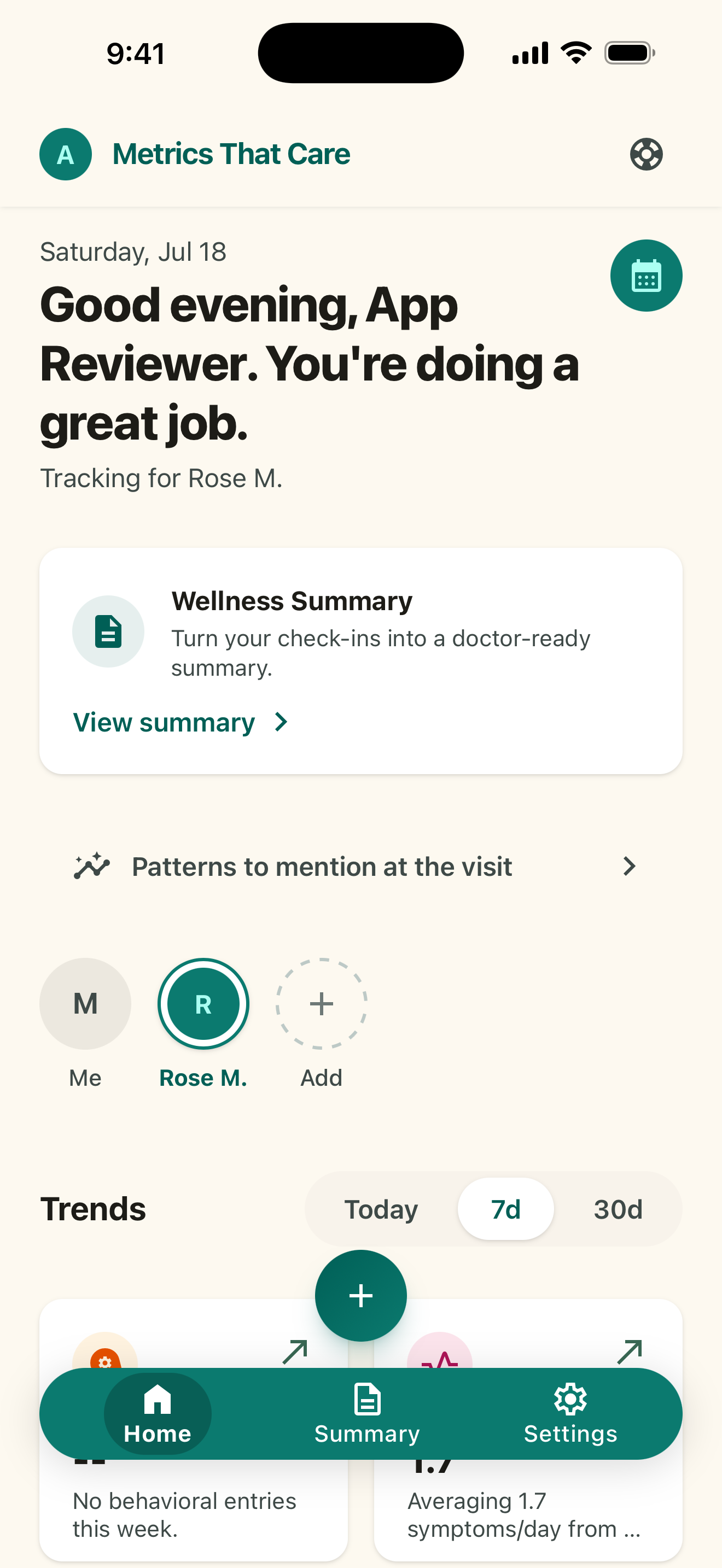
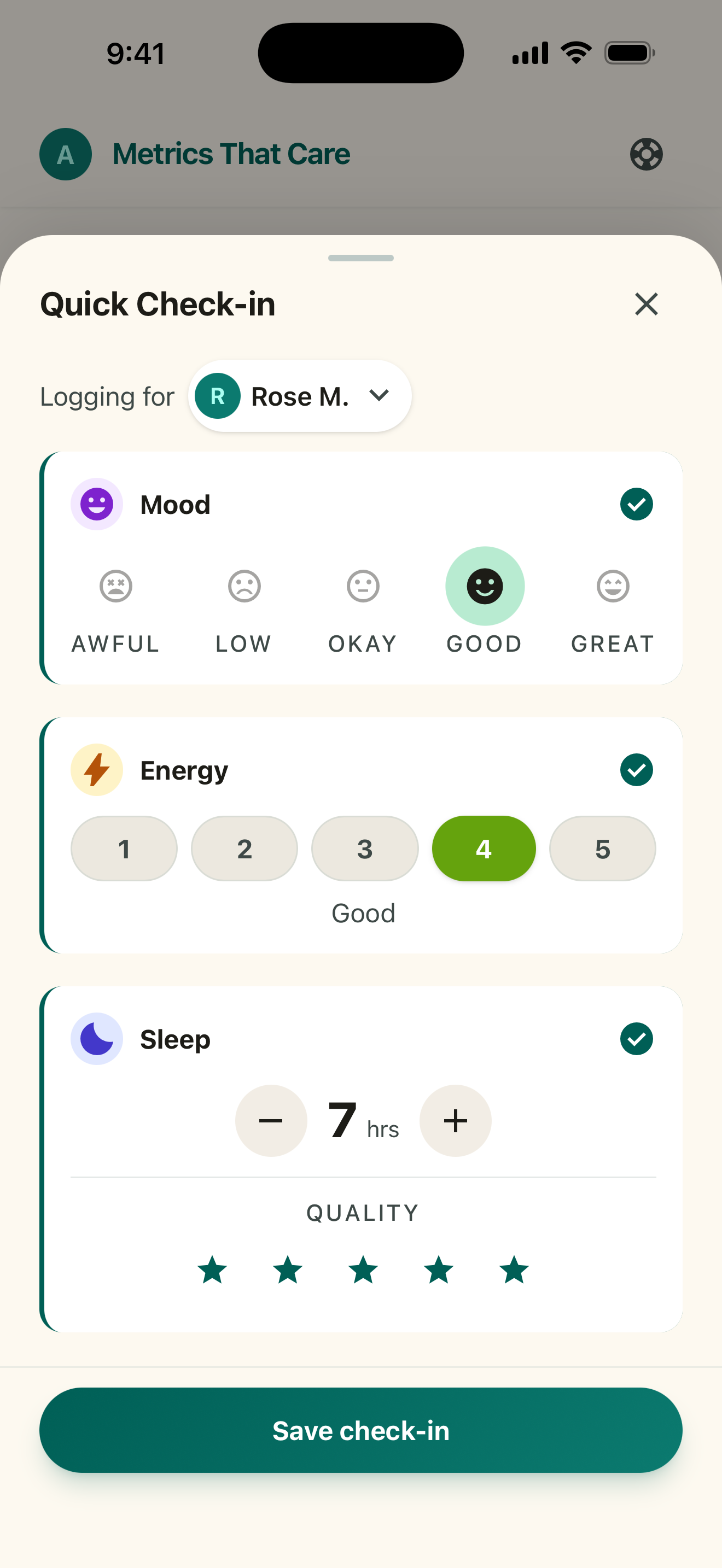
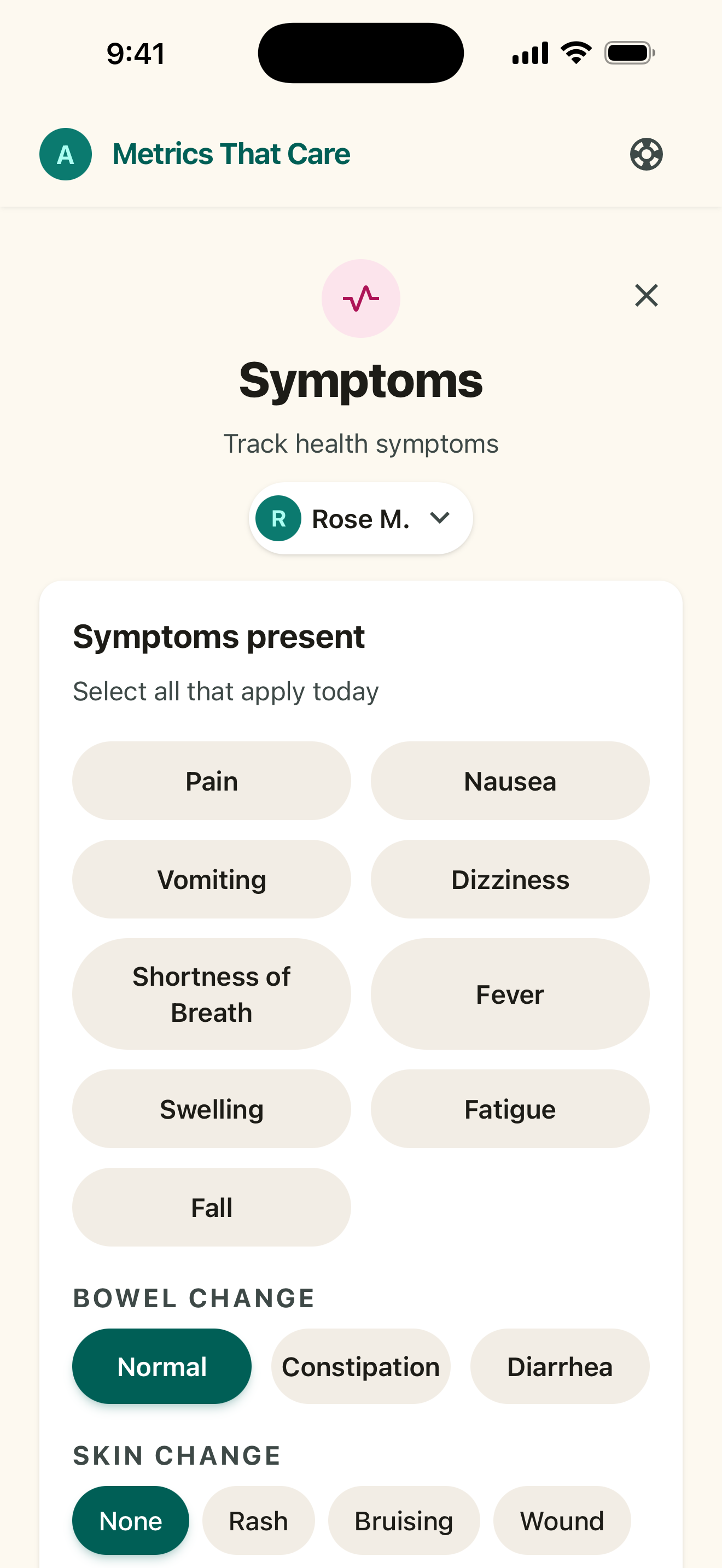
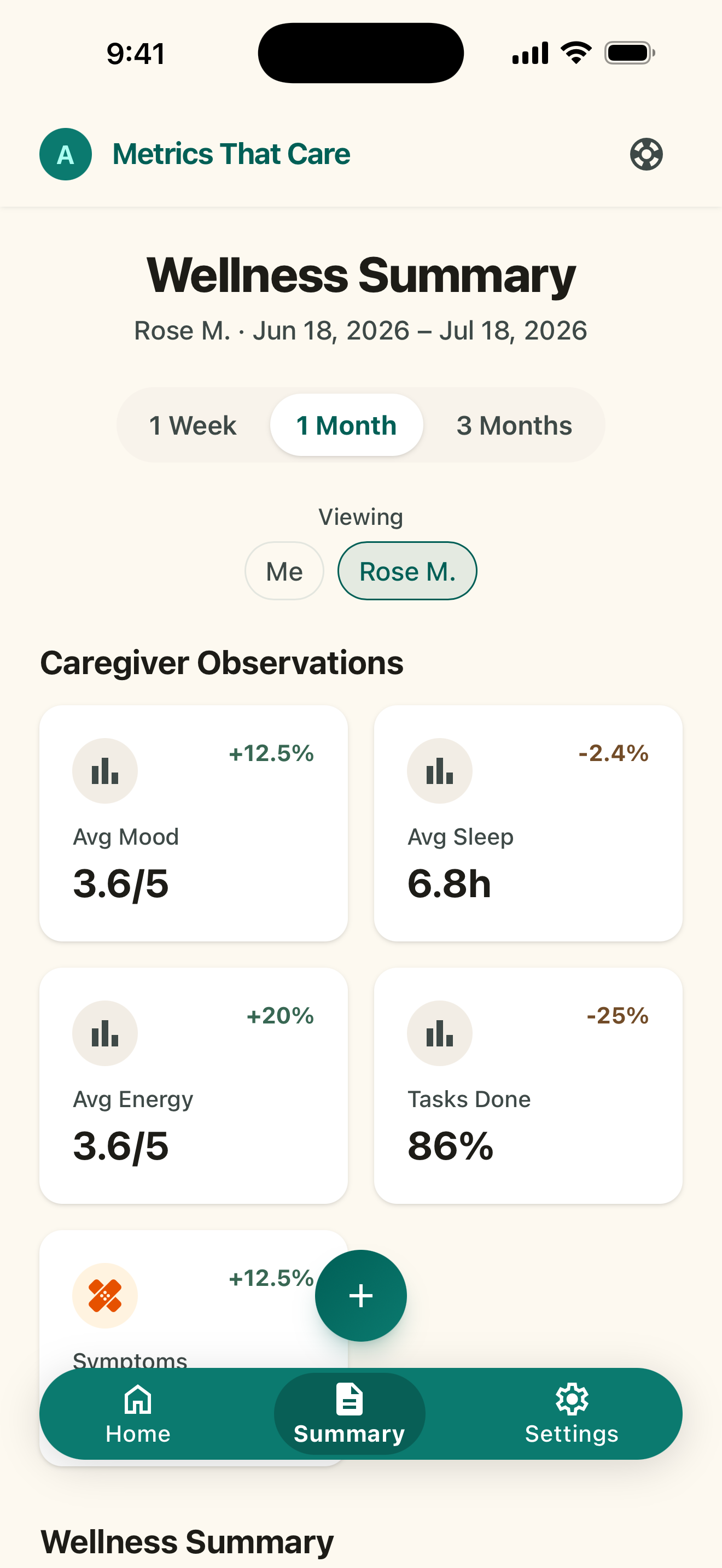
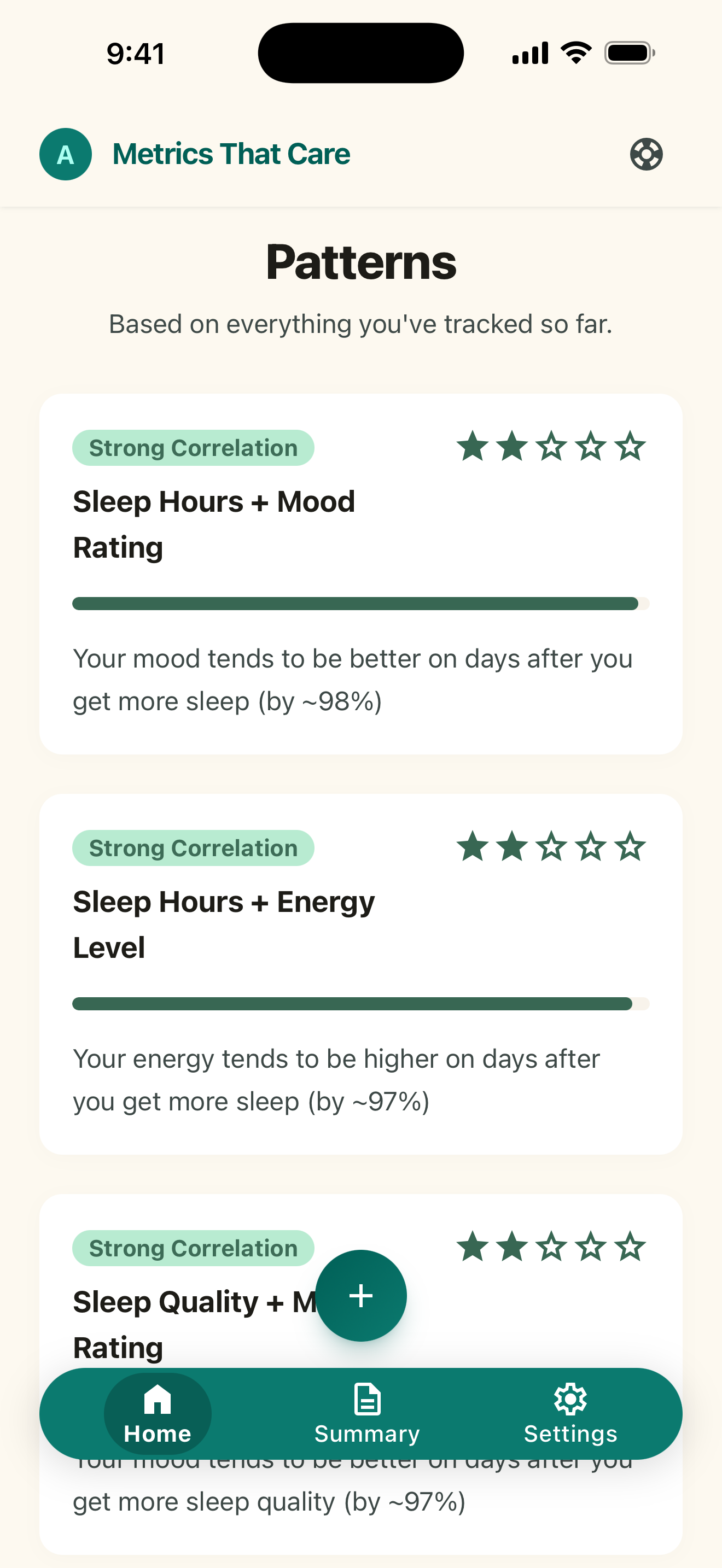
Real screens from the app on the App Store.
The real gap
You already track. It falls apart at the door.
Notes in your phone. A calendar you stopped updating. Things you swore you'd remember and didn't write down.
By the time you're in the room, eleven months of watching turns into a blur, and fifteen minutes isn't enough to reconstruct it from memory. The gap was never the collecting — it's the handoff. This app closes that gap.
Eight modules, thirty seconds a day
Everything you'd tell the doctor if you had time.
Each one is a short screen, built to be filled out standing up, one-handed, at the end of a long day.
Sleep
Hours down, hours up, and how many nights fell apart.
Energy
A daily read on how much they had, and when it ran out.
Mood
What today looked like, logged in the moment, not remembered later.
Tasks & medications
What was due, what got done, what got missed and when.
Behavioral observations
Confusion, agitation, wandering — dated, not guessed at.
Hygiene & daily living
Bathing, dressing, the parts of a day that quietly get harder.
Symptoms with severity
What hurt, how much, and whether it's happened before.
Nutrition & hydration
Meals eaten, meals refused, fluids in, all in one place.
The Care Observation Report
One dated page. What changed, how often, since when.
Everything you log rolls up into a single report a clinician can scan in ninety seconds — instead of you trying to reconstruct ninety days from memory in the room.
It comes out in four parts: notable events flagged up top, what's changed since the last report, the trends across the period, and the individual days that fell outside the usual range.
The trends carry their own statistics
A line like "sleep hours decreased by about 2.1h over 90 days" arrives with the significance test and confidence interval behind it, and with how many days were actually logged. If there isn't enough data to say something, the report says that instead of guessing.
Record, not diagnosis
It says what happened and when — never what it means. The report calls itself a caregiver-prepared summary of home observations, not a medical record and not a substitute for clinical judgment. Your clinician reads it and interprets it. That's their job, not the app's.
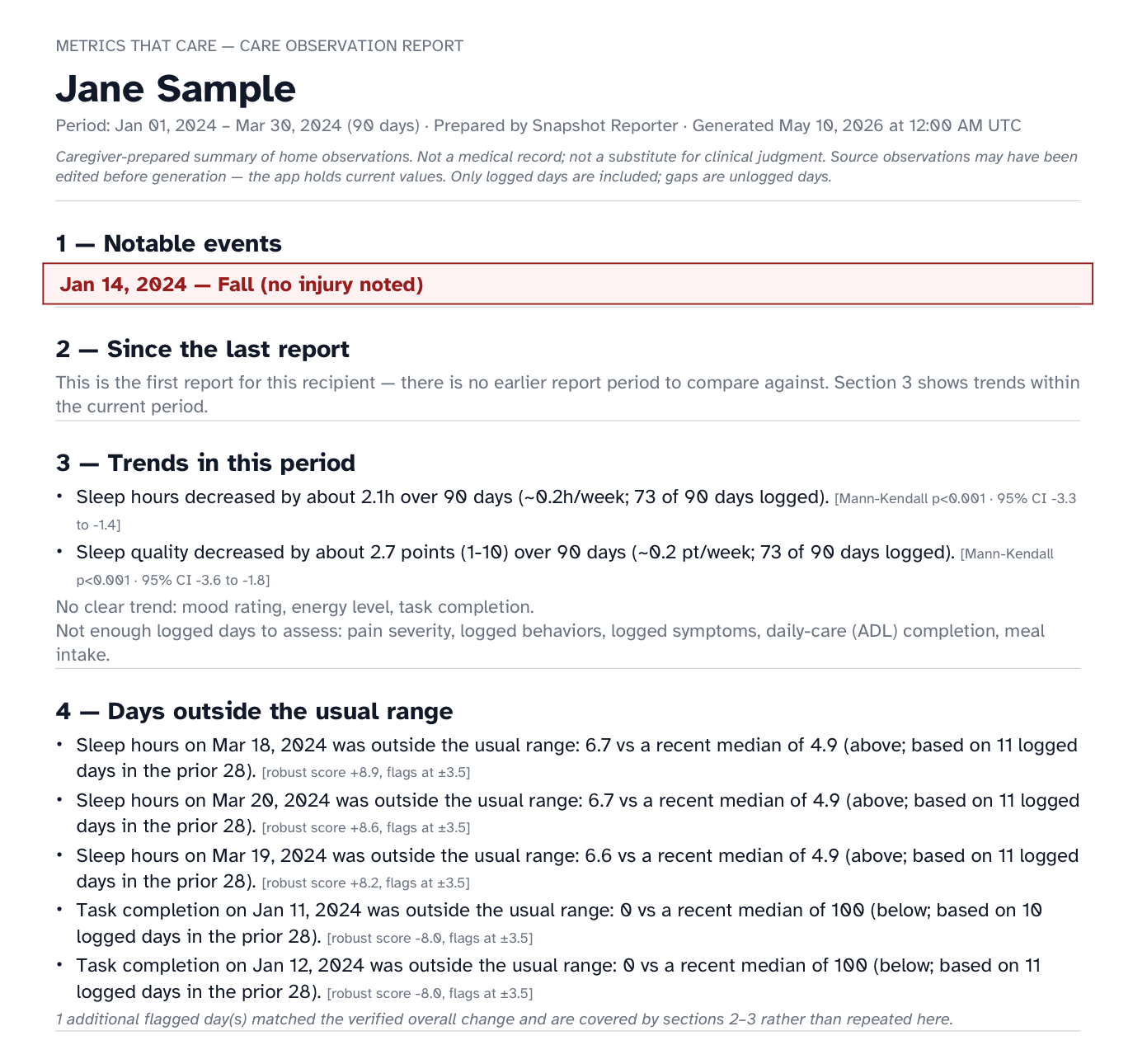
The real first page, generated by the app. Synthetic patient data.
Sharing
Invite family. Nobody has to be the only one who knows.
A sibling, a spouse, a home aide — invite anyone who's part of the care. Three tiers of permission mean you decide who can log, who can only read, and who sees the full record.
Full access
Logs entries, reads the report, manages who else is invited.
Log & view
Adds daily entries and reads the report, no admin controls.
Privacy
It's your family's data. It stays that way.
Cookie-based auth
No tokens sitting in your browser's storage for anyone to grab.
Audit logging
Every access to health data is logged, so nothing happens quietly.
Yours to export or delete
Export everything or erase your account yourself, any time, without emailing anyone for permission.
No ads. No one sells your family's health data — not us, not anyone.
Where to get it
iOS, Android, or any browser.
Same account, same data, whichever one you use. Start on the phone at the bedside and print the report from a laptop later.


Pricing
Free to start. Genuinely usable free.
Not a stripped-down trial — the free version tracks, reports, and shares. Start there, no card required.
Start writing it down tonight.
Thirty seconds a day between now and the next appointment is the whole difference.